

Esbjergværket
Obstruction lights moved from a 250-metre chimney to a 285-metre crane
When KranDOK needed obstruction lights for a 285-metre crane during the demolition of Esbjergværket, the initial solution was to buy a new system. However, a review of the project’s various phases revealed that the existing obstruction lights from the power station’s chimney could be reused.
A major demolition project
Esbjergværket closed on 31 August 2024 as Ørsted’s last coal-fired combined heat and power plant. P. Olesen has since been awarded the turnkey contract for the demolition and reinstatement of the 150,000-square-metre harbour site.
The project spans approximately two years and includes a 74-metre boiler house and the power station’s distinctive 250-metre chimney.
P. Olesen expects to be able to keep up to 99 per cent of the materials in circulation through reuse, recycling and recovery, among other methods.
A new requirement for the 285-metre crane
KranDOK was responsible for erecting a 285-metre crane and contacted Hans Buch with a view to buying new obstruction lights.
At the same time, the chimney had to retain its existing obstruction lights until its demolition began. After that, the lights would no longer be needed on the chimney and could instead be used on the crane.
Brian Faymonville from Hans Buch therefore suggested a rental solution. Instead of buying a new system, KranDOK rented the obstruction lights for the period during which the crane needed them.
The rental model made it possible to keep the obstruction lights on the chimney until demolition began and then move them to the crane. This meant KranDOK avoided investing in a new system, while the existing equipment remained in use through several phases of the project.
From chimney to crane at three heights
Moving the obstruction lights required coordination between several companies.
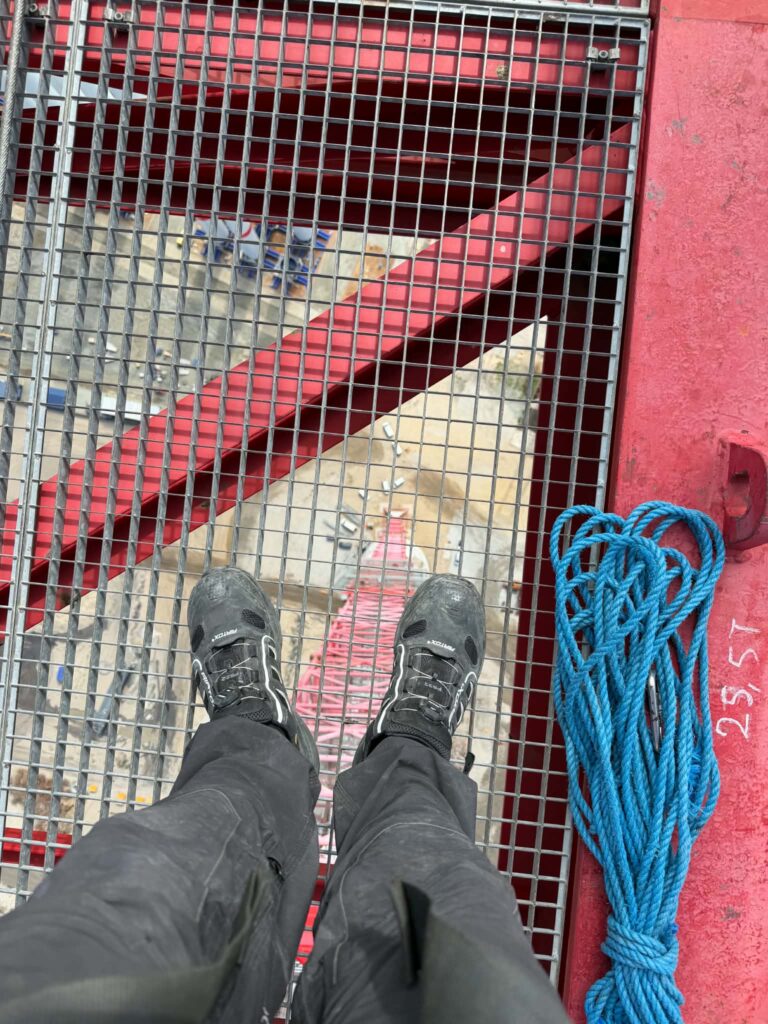
Caverion installed the new cabling on the crane. Claus from Hans Buch and Dennis from DPA Solutions removed the obstruction lights from the chimney and reinstalled them on the crane at three heights: 95, 190 and 285 metres.
The work was scheduled around the project timetable so that the chimney retained its obstruction lights until demolition began. The same equipment could then be moved and used to meet the crane’s requirements.
The solution had to do more than simply work technically. The work also had to fit the demolition project’s timetable so that the chimney retained its obstruction lighting until demolition began, after which the crane could take over as the tallest structure on the site.
Considering the overall requirements changed the solution
The supply of obstruction lights represents only a small part of the overall project. Nevertheless, it demonstrates the value of examining the entire period of use before investing in new equipment.
By choosing a rental solution, KranDOK avoided the cost of a new obstruction lighting system, while existing equipment remained in use across two structures. This provided a solution that was both economical and more resource-conscious.
A specific enquiry about new obstruction lights thus became a solution that followed the project’s various phases.
Contact us
Do you need obstruction lights for a temporary project?
The need for obstruction lights can change as a project progresses through its various phases. The solution should therefore take the entire project into account before any investment is made in new equipment.
Hans Buch helps assess your needs and find a solution that suits the design, schedule and technical requirements.
Teit From Løvstrøm
Product Manager
Brian Beck Faymonville
Sales Engineer