

Reduce energy consumption with high-efficiency electric motors
Electric motors are a key part of many industrial installations and may run for many hours a day. Even small improvements in motor efficiency can therefore affect overall energy consumption. By choosing a high-efficiency electric motor, sizing it correctly and adapting its operation to actual demand, a company can reduce both energy losses and operating costs.
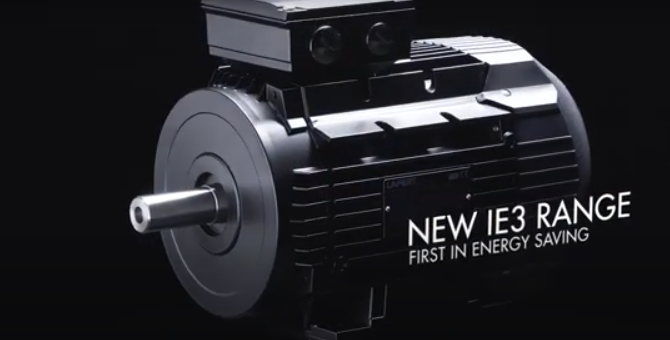
Electric motor efficiency affects overall operating economy
An electric motor converts electrical energy into mechanical motion. However, some energy is lost in the process, including through heat, electrical losses and mechanical friction.
When a motor runs for many hours a year, the difference between an older standard motor and a high-efficiency motor can therefore have a noticeable impact on energy consumption. The motor’s purchase price often accounts for only a small proportion of its total lifetime costs, while electricity consumption continues for as long as the motor is running.
It therefore makes sense to consider the motor’s total lifetime costs rather than simply comparing purchase prices.
What is a high-efficiency electric motor?
The energy efficiency of electric motors is indicated by international IE classes. As a general rule, the higher the IE class, the less energy is lost when the motor converts electrical energy into mechanical work.
The classes range from IE1 to IE5, with IE3 designated as Premium Efficiency, IE4 as Super Premium Efficiency and IE5 as Ultra Premium Efficiency. Actual efficiency depends on factors such as the motor’s size, load, speed and design.
However, a higher IE class alone does not guarantee the most energy-efficient solution. The motor must also be correctly sized and suited to the machine and process it will drive.
How to assess the potential for energy savings
A systematic review of the company’s motor drives can identify where replacing or optimising existing motors will be most cost-effective. Start with the motors that have the most operating hours or the highest power requirements.
- Record the motors’ power ratings, ages and annual operating hours
- Check whether the motors are oversized or undersized
- Compare their current efficiency with newer IE classes
- Assess the motors’ loads during normal operation
- Check whether the speed can be adjusted using a variable frequency drive
- Prioritise motors with long operating hours and continuous loads
- Evaluate the investment based on the motor’s total lifetime costs
- Include the gearbox, transmission and driven machine in the assessment
A variable frequency drive may be suitable for applications where demand varies. It allows the motor’s speed to be controlled so that the motor does not constantly operate at a higher output than necessary.
Lower energy losses and more efficient motor operation
High-efficiency electric motors can reduce energy losses and therefore electricity consumption in industrial installations. Lower losses also mean that less energy is converted into heat.
The greatest benefit is achieved when the motor forms part of an integrated solution in which the motor size, control, gearbox and load profile are matched to the application. A correctly sized motor can therefore be more important than simply choosing the highest possible IE class.
When planning replacements, new machinery or upgrades to existing systems, energy efficiency should be assessed early on. This makes it possible to compare the investment with the expected savings over the solution’s entire lifetime.
Find the right motor
Is your motor operation energy-efficient?
Get help assessing motor loads, efficiency and potential energy savings.