

Air quality: When valid data is crucial
Air quality is important for the environment, health and documentation alike. When local authorities, ports, airports, industries or other stakeholders want to reduce particulate pollution and unwanted emissions, they need valid data. Real-time air quality monitoring makes it easier to document challenges, track developments and make informed decisions.

Air quality is part of the green agenda
Air quality has become a greater part of our collective awareness. This is particularly true since the coronavirus pandemic, but air quality also features in the UN Sustainable Development Goals. Goal 11 highlights, among other things, the need to reduce the adverse environmental impact per capita by 2030, with air quality as one of its focus areas.
Although Denmark is seen as a green frontrunner in many areas, challenges remain with particulate pollution and unwanted emissions. Accurate measurement and documentation are therefore important when monitoring and improving air quality.

Particulate pollution and emissions require documentation
Many local authorities face air quality challenges. These may be caused by particulate pollution or unwanted emissions from traffic, ports, airports or specific industries.
For some, the task is to reduce the negative effects. For others, it is about highlighting particularly good air quality or documenting green ambitions. Whatever the purpose, it requires technology that can collect data correctly and make it usable in practice.
Real-time monitoring provides a better basis for decision-making
In an increasingly data-driven world, many decisions are based on valid data. It is therefore crucial that air quality data is accessible, accurate and quick to work with.
Real-time air quality monitoring can make it possible to track developments continuously and respond to environmental changes in a more informed way. This places demands on the technology, software and data transmission alike, so that the measurements can be used as documentation.
Examples of questions to clarify when measuring air quality:
- Which area needs to be monitored?
- Will the measurements be used for documentation, optimisation or communication?
- Is the challenge particulate pollution, emissions or both?
- Does the impact come from traffic, ports, airports or industry?
- Does the data need to be available in real time?
- How should the data be collected, transmitted and visualised?
- Who needs to be able to use the documentation?
- Will the solution be used temporarily or permanently?
- Are wireless monitoring stations needed?
- Should the measurements support green ambitions or dialogue with the authorities?
Wireless monitoring stations from Kunak
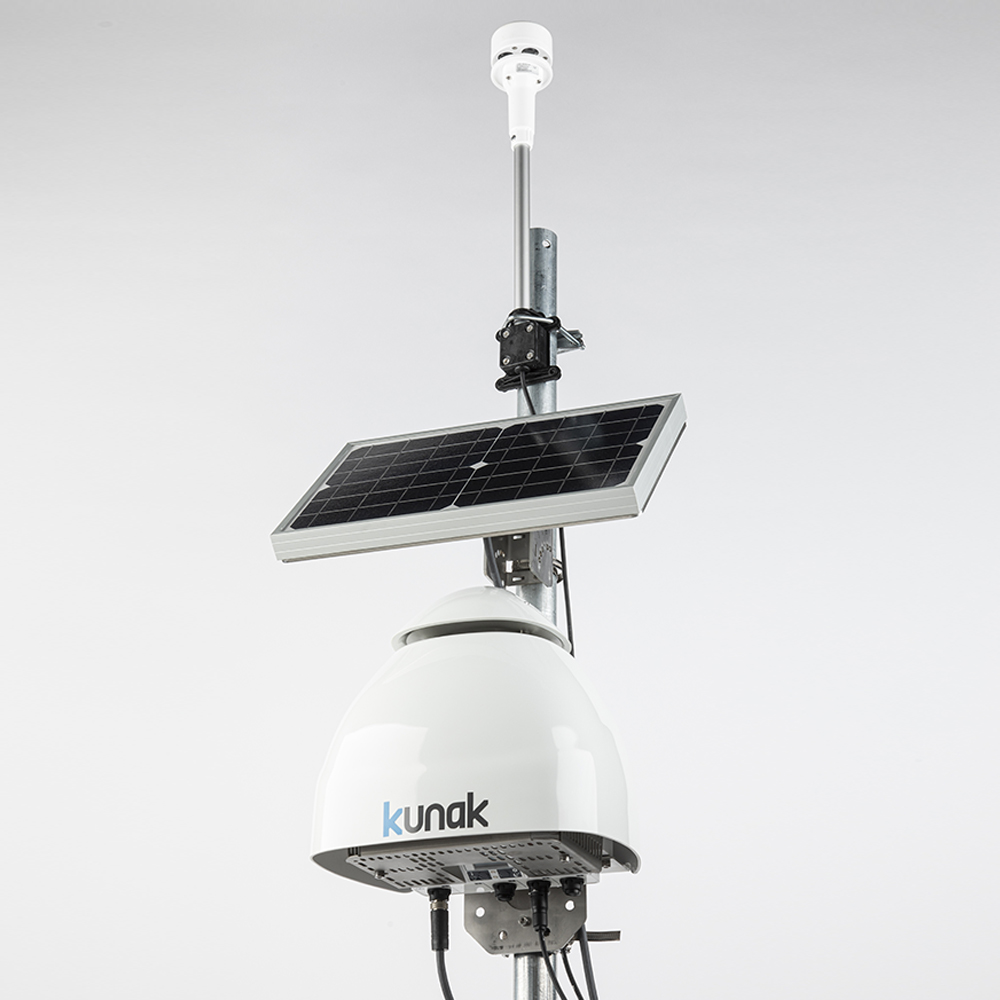
Hans Buch offers technology for real-time air quality monitoring. Wireless monitoring stations from Kunak can be used wherever valid data, correct transmission and ongoing documentation of air quality are needed.
The solution is relevant for stakeholders who want to measure, document and raise awareness of air quality. These could include local authorities, ports, airports, industries or other environments where particulate pollution and emissions need to be monitored.
Climate monitoring
Do you need to measure air quality?
Hans Buch can provide technical advice on real-time monitoring, data collection and wireless measurement stations.
Brian Beck Faymonville
Sales Engineer
Teit From Løvstrøm
Product Manager