

Flue gas measurement in the combustion process
Flue gas measurement is important in combustion processes where emissions of gases and particles need to be monitored. Flue gas measurement is used for process control, efficiency and documenting that the process remains within applicable emission limits.
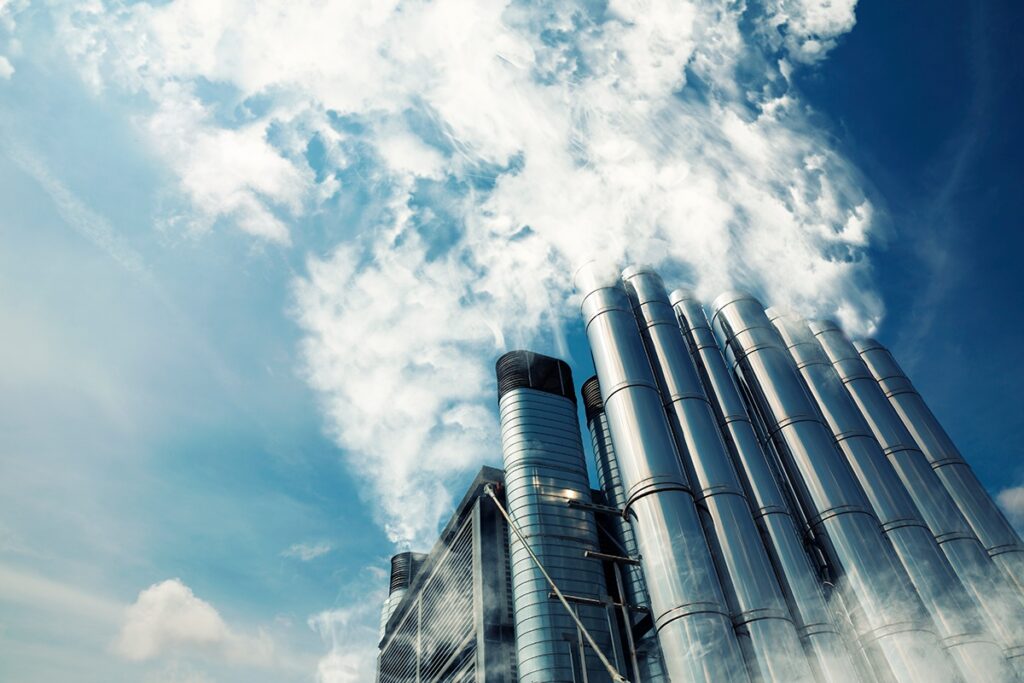
Why is flue gas measurement important?
Combustion processes in power generation and other industries generate emissions of gases and particles. These emissions can be harmful to people and the environment, which is why they are regulated by authorities in many countries.
Flue gas measurement makes it possible to monitor the exhaust gases produced when fuel or other materials are burned. Accurate monitoring is important because it can document that the process remains within permitted emission limits.
Flue gas measurement is used for process control and emissions monitoring
Flue gas measurement is relevant to process control, efficiency and emissions monitoring. Measuring flue gases accurately makes it easier to optimise combustion conditions while documenting compliance with local environmental regulations.
Opacity or particulate measurement is often required at power stations around the world. Gaseous pollutants such as carbon monoxide and nitrogen oxides must also be monitored to demonstrate that emissions remain within the applicable limits.
How to measure flue gas with the right equipment
Effective flue gas measurement requires equipment suited to the specific combustion process and the emissions to be monitored. This can include measuring oxygen, carbon monoxide, nitrogen oxides, sulphur dioxide, carbon dioxide, hydrogen sulphide and hydrocarbons.
Lancom 4 from AMETEK Land is a portable flue gas analyser that can be used for periodic emissions testing in industries that burn coal, natural gas, oil or biomass. As the analyser is portable, it can be used to measure emissions at different points within the same process or across multiple processes.
Examples of factors that may be relevant when measuring flue gas:
- Which combustion process needs to be monitored?
- Which fuel is used: coal, natural gas, oil, biomass or something else?
- Do oxygen, carbon monoxide, carbon dioxide or nitrogen oxides need to be measured?
- Do particles or opacity need to be monitored?
- Is periodic testing or continuous monitoring required?
- Does the equipment need to be portable between multiple measurement points?
- Which emission limits does the process need to demonstrate compliance with?
- Is measurement of sulphur dioxide, hydrogen sulphide or hydrocarbons required?
- Will the measurement be used for process optimisation, documentation or both?
Lancom 4 for flue gas measurement and emissions control
Lancom 4 can measure up to eight flue gases simultaneously using nine separate sensors across a range of combustion and emissions processes. The main flue gases are monitored using a combination of electrochemical sensors, infrared measurement and pellistor/catalytic measurement.
Electrochemical sensors are used for O2, CO, SO2, NO, NO2 and H2S, among others. Infrared measurement is used for CO2, while pellistor/catalytic measurement is used for hydrocarbons. Lancom 4 can also monitor species not commonly measured by CEMS, such as hydrocarbons and hydrogen sulphide.
The analyser is easy to set up, operate and configure for a wide range of applications. This makes it well suited to optimising combustion conditions and documenting compliance with emissions requirements.
Do you need robust LED tubes?
Hans Buch can help you with LED solutions for environments subject to impacts, vibrations, jolts and demanding operating conditions.