

Instrumentation for the food and pharmaceutical industries
Instrumentation is used to measure and control key process parameters such as temperature, pressure, flow, level and pH. In the food, beverage and pharmaceutical industries, accurate measurements are crucial to product quality, safety, efficiency and compliance with quality requirements.
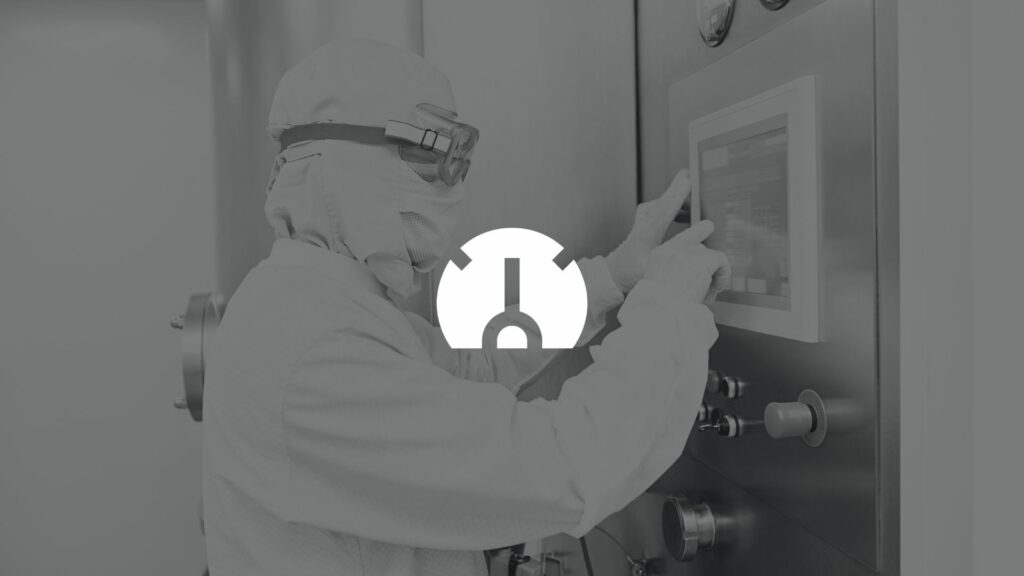
When precision is part of quality assurance
In the production of food, beverages and medical products, small deviations are rarely just minor details. Temperature, pressure, flow, level and pH directly affect whether the process runs consistently and whether the end product meets the necessary requirements.
This makes instrumentation an important part of quality assurance. The right sensors, transmitters and meters make it possible to monitor the process continuously, respond to changes and ensure that production takes place under controlled conditions.
Key measurements in food and pharmaceutical production
Temperature measurement is one of the most important process parameters. In the pharmaceutical industry, precise temperature control is used to ensure the correct conditions during manufacturing and storage. In the food and beverage industry, temperature measurement is important in processes such as pasteurisation, sterilisation and heating, where proper control is necessary to reduce bacterial growth and maintain product safety.
Pressure measurement is relevant in processes involving liquids and gases under high pressure, such as fermentation or production environments in the pharmaceutical industry. Monitoring pressure conditions can reduce the risk of leaks and hazardous situations that could affect both product safety and quality.
Flow measurement is used to control the quantity of liquids or gases in a system. In food and beverage production, flow meters can help ensure precise ingredient dosing and optimise water and energy consumption. In the pharmaceutical industry, accurate flow control is important because even small variations can affect a product’s chemical composition, efficacy and safety.
How to choose instrumentation for your application
The choice of instrumentation should be based on the application. It is not just about finding a component that can measure a particular value, but about choosing a solution suited to the medium, environment, process and requirements governing production.
Hans Buch works with instrumentation components from manufacturers such as Halstrup-Walcher, Sauter, Huba and E+E Elektronik. The range includes solutions for food, beverage and pharmaceutical production, among other applications, where precision, reliability and durability are key requirements.
When choosing instrumentation, you should pay particular attention to clarifying:
- Which process parameters need to be measured
- Whether temperature, pressure, flow, level or pH measurement is required
- Which medium is being measured
- What the requirements are for accuracy and response time
- Whether the measurement needs to be integrated with automated systems
- What the requirements are for hygiene, safety and documentation
- Whether the environment places special demands on component durability
- How much maintenance the solution can require
- Whether the data will be used for analysis, optimisation or resource savings
Stable operation requires continuous measurement and control
pH measurement is a critical parameter in the food, beverage and pharmaceutical industries. In food production, the pH value can affect taste and shelf life. In pharmaceutical production, the pH value is important in ensuring that chemical processes proceed as expected and without unwanted side effects.
Level measurement is used to monitor tanks and vessels to ensure they neither overflow nor run dry. This is particularly important in continuous production lines, where stable operation is crucial. In the pharmaceutical industry, level measurement can also help ensure the correct dosing of chemicals and other liquids.
Modern instrumentation is often closely linked to automated control systems. When sensor data is analysed continuously, it becomes possible to respond more quickly to changes, reduce waste, optimise production and improve resource utilisation. This provides a better basis for proactive adjustments in real time and can enhance both productivity and sustainability.
Instrumentation for food, beverage or pharmaceutical production?
Do you need instrumentation for food, beverage or pharmaceutical production?
Hans Buch provides technical advice to help you choose meters, sensors and transmitters that suit your application.