

What is an LCA?
LCA stands for Life Cycle Assessment, known in Danish as a livscyklusvurdering. An LCA is used to document a product’s climate and environmental footprint throughout the value chain – from production and distribution to use, reuse or disposal.
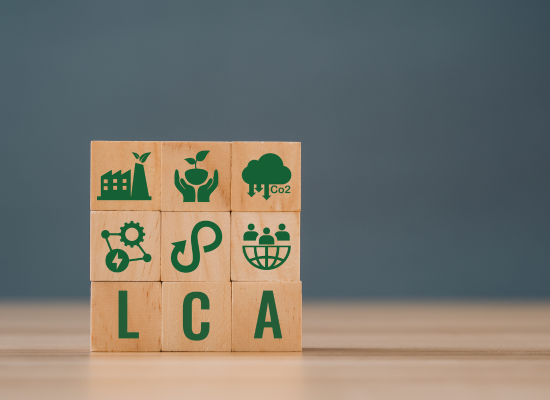
Understanding a product’s footprint from start to finish
An LCA considers a product’s overall characteristics throughout its lifetime. This is often called a cradle-to-grave assessment, because the analysis covers not only the product itself, but also the resources, emissions and environmental impacts associated with its journey through the value chain.
This makes LCA relevant for companies looking to make more evidence-based decisions in production, procurement and operations. A life cycle assessment makes it easier to see where climate and environmental impacts arise and where improvements can be made.
What does a life cycle assessment include?
An LCA documents data on a product’s impact on the climate and the environment. This covers the creation and use of the product, as well as the stage at which it is either reused, refurbished or disposed of.
Emissions can be broken down by the different stages of a product’s life cycle. These may include emissions from raw materials, processing and production, distribution, product use, and second-life or end-of-life stages. In this way, an LCA provides a more complete picture than an assessment focused solely on the product’s operation or purchase price.
How to work with LCA in practice
Working with LCA is about gaining an overview of the points in the value chain where a product has an impact on the climate and the environment. This applies both to the indirect impacts that occur before the product is put into use and to the direct impacts that arise during operation.
Upstream emissions relate to impacts that occur before or around the use of the product. These may include, for example, the consumption of resources such as fuel, electricity, gas, water and heat during processing and distribution. Downstream emissions relate to the direct impacts that arise during operation and over which the company has greater control.
When assessing a product’s life cycle, you should pay particular attention to:
- Raw materials and materials
- Processing and production
- Distribution and transport
- Resource consumption during use
- Direct emissions from operations
- Potential for refurbishment or a second life
- Disposal and end-of-life
- Documentation for ESG, EPD or other requirements
LCA provides a better basis for decision-making
An LCA can help optimise existing production and make it easier to make more sustainable choices in operations and procurement. It can also be used to highlight specific efforts to reduce the company’s climate and environmental impacts.
LCA also provides an important basis for environmental product declarations, also known as EPDs. The documentation may be relevant, for example, in relation to building regulations, which set emission limits for new buildings. For many companies, LCA is therefore not just a technical tool, but part of their work on documentation, reporting and responsible choices throughout the value chain.
LCA and environmental requirements
Would you like a clearer overview of documentation, environmental requirements and product selection?
Hans Buch provides technical knowledge and advice to help you make better-informed decisions.